




Cancun is one of the world’s most popular vacation destinations, so it’s only natural that it’s home to some incredible timeshares. But if you’re new to vacation ownership, the intricacies of buying a timeshare in Cancun can be a little intimidating. But you don’t need to worry! Here’s how you can own your own slice of Mexican paradise.
- How Does a Timeshare in Cancun Work?
- What You Actually Own With a Timeshare in Cancun
- What a Timeshare in Cancun Costs to Own Each Year
- Cancun Timeshare Resorts Worth Knowing on the Resale Market
- What the Holiday Inn Club Vacations Acquisition Changed for Owners
- Where a Timeshare in Cancun Can Take You Through Exchange
- Buying a Timeshare in Cancun on the Resale Market
- What Are Your Rights When You Buy a Timeshare in Cancun?
- Frequently Asked Questions
- Find the Right Timeshare in Cancun
How Does a Timeshare in Cancun Work?
A timeshare in Cancun is typically right-to-use. This means that, rather than purchasing a permanent stake in a resort, you’re buying regular access to that resort for a set period: typically 25-50 years. Cancun, as a coastal city, sits within Mexico’s restricted zone: foreign individuals aren’t allowed to own properties within 50km (31 mi) from the coast unless a Mexican bank or corporation owns the title.
Beyond the ownership model, timeshares in Cancun work the same as they do in the United States. Your contract will be one of three types. Fixed weeks give you access at the same time each year, while floating weeks let you pick any week in a given season. Points allow you to book a stay whenever you’d like, provided there’s availability. However, more sought-after dates require more points to book.
What You Actually Own With a Timeshare in Cancun
When you buy a Cancun timeshare, you’re not buying a deeded piece of real estate. Instead, you’re purchasing a “right-to-use” contract. You’re buying permission to use that property at a set interval, but have no claim to the property itself.
This is different from a fideicomiso (bank trust), which allows foreigners to legally purchase land by entrusting the property rights to a local financial institution. In a fideicomiso, the beneficiary (or fideicomisario) is the de facto owner of the property. In practice, it means they are free to do what they like with a property, including selling it or willing it to heirs.
For the average timeshare owner, this is a difference without distinction. You can still sell your timeshare on the resale market or will it to heirs. It’s just that the contract represents the metaphorical keys to the property, rather than the property itself. Legally, it’s a different (and much less complicated) process, but unless you’re getting into contract law, you won’t notice a difference.
Right-to-Use Timeshares Have an Expiration Date
Unlike a typical deeded timeshare, which lasts in perpetuity, a right-to-use timeshare has a defined expiration date. Usually, this is 25-50 years after the initial purchase. Many timeshare owners see this as a benefit: you’ve got a guaranteed, no-stress exit date. However, it’s important to check the expiration date on any resale contract before you commit.
What a Timeshare in Cancun Costs to Own Each Year
Timeshares in Cancun have maintenance fees, just like any other timeshare. ARDA’s 2026 State of the Industry report estimates that timeshares in the US have an average maintenance fee of $1,550 per weekly interval. However, ARDA publishes no figures for Mexico. That said, you can expect similar fees, particularly if you own with an American vacation club like Hilton, Wyndham, or Holiday Inn.
Many timeshares in Mexico are all-inclusive, so food, drinks, and entertainment come with your stay — none of it covered by your maintenance fee. Instead, you pay a separate all-inclusive fee, charged per guest for every night you stay. Ask whether the package must be bought for your whole party and trip, and get the current rate in writing. It comes on top of resort fees and taxes, so decide whether the luxuries are worth the extra cost.
The good news is that some timeshares are opt-in all-inclusive. If you prefer to eat locally, or to cook food in your villa, you don’t need to spring for the included food and drink. If your goal is an authentic Mexican adventure, you can save a bit of cash by skipping the all-inclusives.
Cancun Timeshare Resorts Worth Knowing on the Resale Market
A timeshare in Cancun can mean a familiar hotel brand or an independent all-inclusive resort. That difference shapes what your week actually costs. Two Cancun resorts anchor the resale market here, and they sit at opposite ends of that range. Here is what each one offers.
The Royal Sands All Suites Resort & Spa
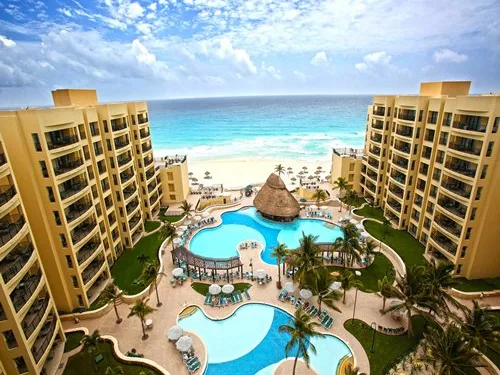

Located on the east shore of Cancun’s hotel zone, the Royal Sands features 340 two-bedroom villas, with full kitchens, daily maid service, and breathtaking views of the Caribbean. Other amenities include tennis and volleyball courts, recreation equipment, a spa, and multiple pools.
The Royal Sands has an optional all-inclusive plan, which includes unlimited food and drink, theme nights, daily activities, and non-motorized watersports. Your all-inclusive package is also good at the other Royal branded resorts in the Cancun area, conveniently accessed via shuttle.
If you prefer to cook your own meals, the Royal Market offers fresh produce, deli meats, and other assorted ingredients. Pre-order before you arrive, and they’ll even stock the fridge for you!
Westin Lagunamar Ocean Resort
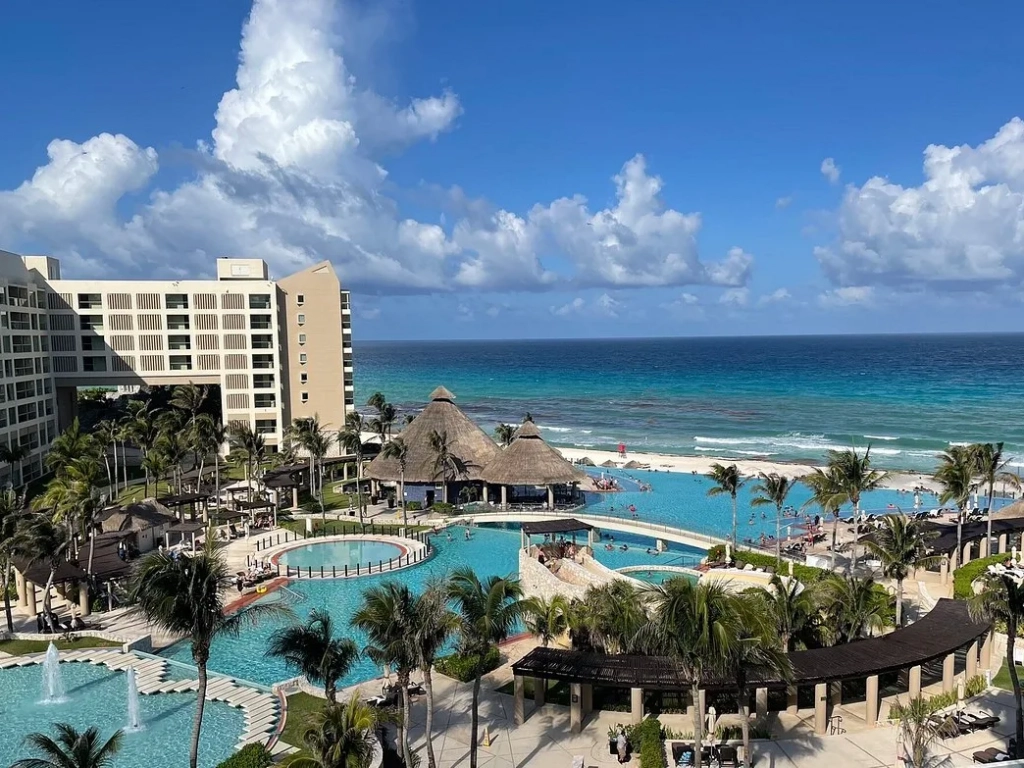
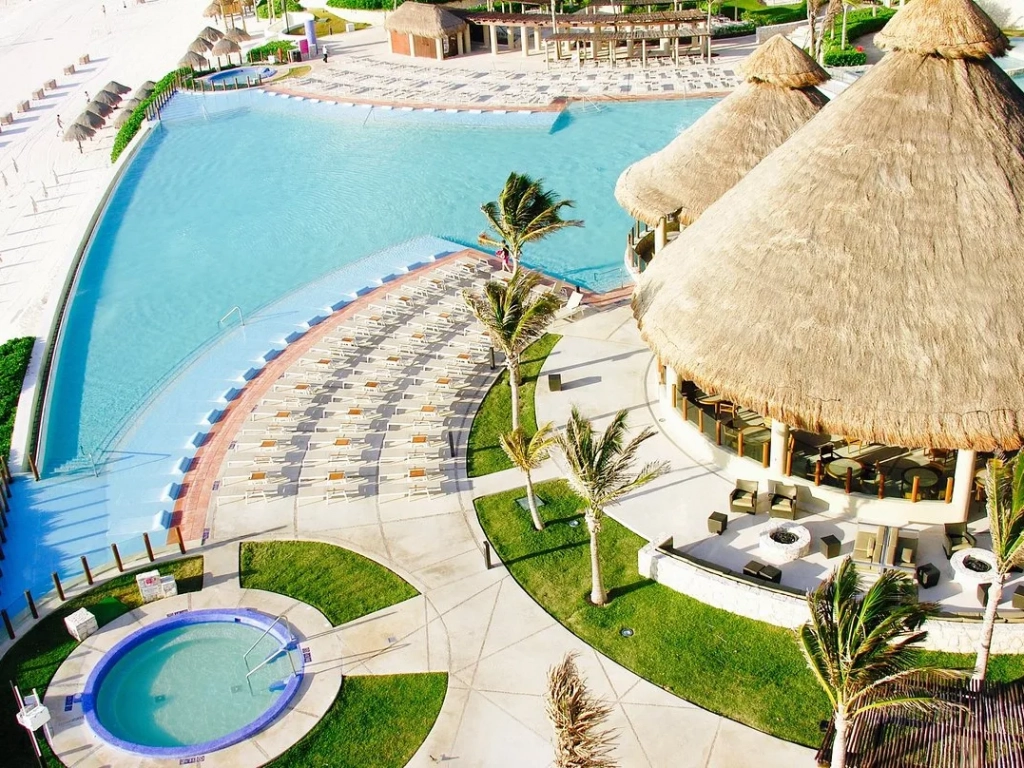
Westin Lagunamar Ocean Resort is part of the Westin Vacation Club, and the larger Marriott Vacation Club brand. Built around Westin’s commitment to wellness, the Lagunamar has everything fans have come to expect from a Westin resort. There are signature Heavenly Beds, luxury bathrooms with jetted tubs, and an on-site spa. Rooms feature full kitchens, private lanais, and sparkling ocean views.
Unlike the Royal Sands, the Westin Lagunamar is not an all-inclusive, though they do have a dining credit program. Fortunately, the La Isla Cancun shopping center is just across the street. There you can enjoy fine dining, a casino, and luxury shops like Gucci and Balenciaga. Not into the runway look? No problem! They also have more familiar brands like Zara, Guess, and Crocs, alongside kid-friendly stores like LEGO and Miniso.
What the Holiday Inn Club Vacations Acquisition Changed for Owners
On May 23, 2023, Holiday Inn Club Vacations acquired four Mexico resorts from Royal Resorts, marking the company’s first international expansion. These resorts are the Royal Cancun, the Royal Sands in Cancun, the Royal Haciendas at Riviera Maya, and the Grand Residences in Puerto Morelos. All four resorts are now available through the Holiday Inn Vacation Club’s ownership portal.
Not every Royal Resort in Mexico was acquired by Holiday Inn Club Vacations. The Royal Uno was renamed to the Hilton Cancun Mar Caribe All Inclusive Resort. Other former Royal resorts now go by new names, or have since closed. If you’re looking to take full advantage of your all-inclusive plan, be sure to check the most up-to-date information before you go.
What Happens When Your Timeshare is Under New Management
Royal Resorts were primarily a weeks-based ownership program before being acquired by Holiday Inn Club Vacations, and many resale timeshares retain that model. Holiday Inn may be willing to convert your week into points, but many owners prefer the reliability of a fixed week over points.
Unless you’re using a vacation exchange, your week at a timeshare in Cancun won’t convert to a stay at one of Holiday Inn Vacation Club’s other resorts. If you’re looking for maximum flexibility, it’s best to buy Trust Points at one of their US locations. However, if you want the comfort of knowing your reservation is secure year after year, a fixed week is the way to go.
Where a Timeshare in Cancun Can Take You Through Exchange
Vacation exchange allows owners to trade their timeshare for a different vacation, including cruises, guided tours, and international getaways. You’re not limited to timeshare resorts either: a vacation exchange nets you access to properties across the world, giving you thousands of additional options.
There are two main vacation exchanges out there: RCI, which is a subsidiary of Travel + Leisure Co, and Interval International, run by Marriott Vacations Worldwide. Both exchanges serve different vacation clubs, but have some overlap.
Westin Lagunamar is the most clear cut: as a MVW brand, they use Interval International as their preferred exchange. Royal Sands is a bit more complex. Historically, Royal Resorts used RCI as their vacation exchange, but Holiday Inn Club Vacations is one of the few brands that uses both exchanges. We’ve seen it advertised on both sites, but check the contract for more detail before you buy.
Does it Cost Money to Join a Vacation Exchange?
Yes, vacation exchanges have additional membership fees on top of what you already pay for timeshare ownership. Some vacation clubs, such as Marriott, include complementary exchange membership as a perk. Check the contract before you buy to see if this perk transfers.
Buying a Timeshare in Cancun on the Resale Market
Buying a timeshare in Cancun on the resale market means purchasing an existing ownership directly from the current owner rather than from the resort. Because that owner often lists below the resort’s original price, you gain access to popular properties like the Royal Sands or the Westin Lagunamar Ocean Resort for less. The buying process is easy when you work with a licensed broker.
Timeshare Broker Associates is one of the most trusted names in the vacation ownership industry. We’re a licensed real estate brokerage and a member of ARDA and the National Association of Realtors. We’re paid only when a sale actually closes, so our goals stay aligned with yours.
What Are Your Rights When You Buy a Timeshare in Cancun?
PROFECO, Mexico’s consumer protection agency, grants buyers the right to cancel a timeshare contract for any reason within 5 business days of signing. Those safeguards fall under Mexico’s Federal Consumer Protection Law, which PROFECO oversees.
That 5-business-day window attaches to a timeshare contract signed in Mexico, typically at a developer’s sales presentation. A US-brokered resale closing is a different transaction, so confirm what actually applies to your purchase before you sign. For comparison, our research shows US state rescission windows range from 3 to 15 days, while Mexico’s window is 5 business days. Read your contract and confirm the exact refund timeline in writing.
Frequently Asked Questions
Find the Right Timeshare in Cancun
Ready to see what’s available? Browse the current Cancun resale postings to explore ownership options on the market right now.
Have questions before you begin? Call our team at (407) 917-8432 and talk with a licensed broker who can walk you through your options clearly.
There’s no rush here. We’re happy to help whenever you’re ready, at a pace that feels comfortable to you.